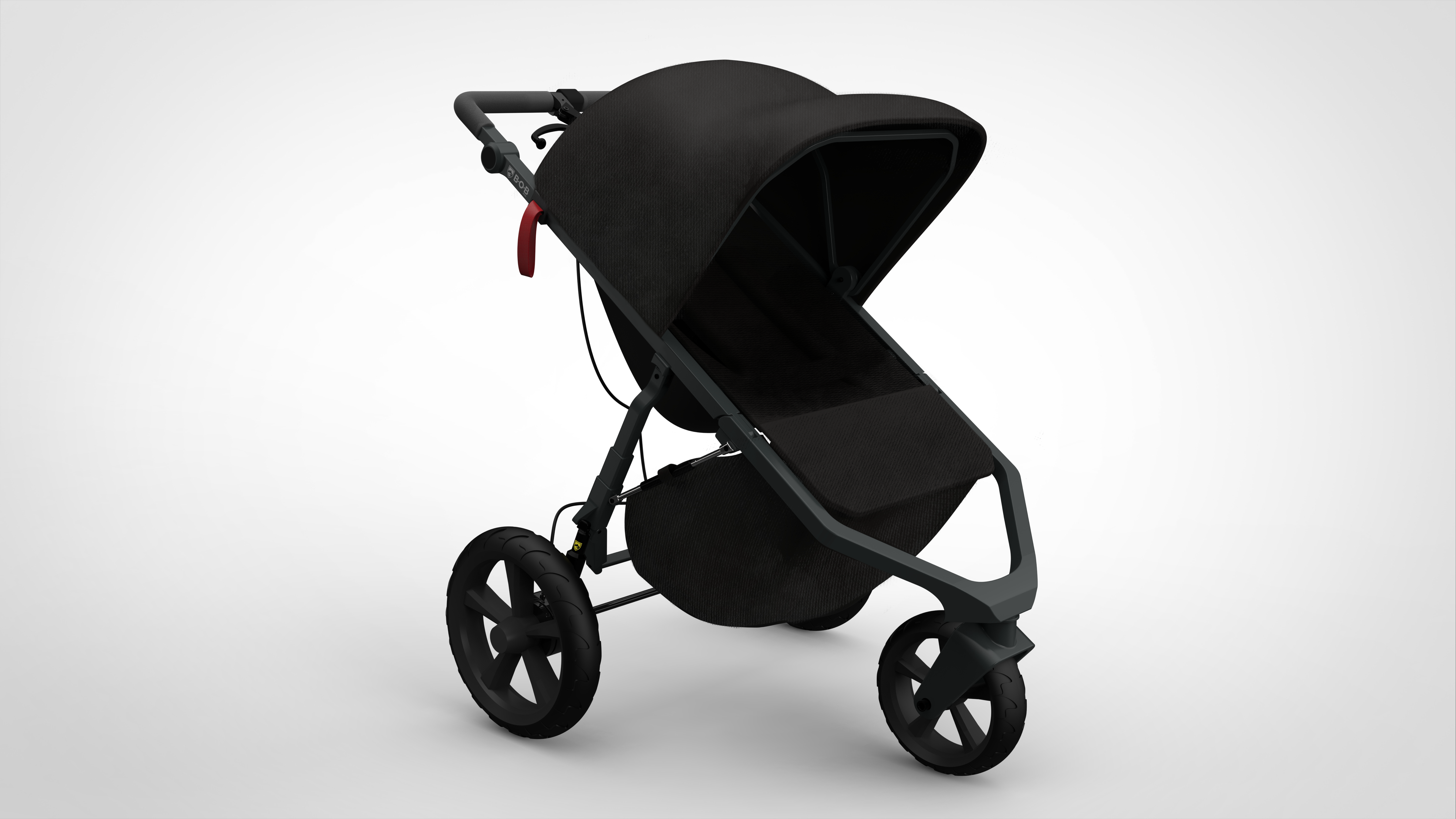
Over 1 in 4 children 3 years old or younger are prone to seizure at least once in their life. However, a small percentage of those children will develop cronic seizures, which can be debilitating and require specialized equipment to manage.
Design a stroller that is both durable and collapsible, making it easy for parents to quickly deal with an unexpected seizure wherever. The stroller should also be designed with the child in mind, with a comfortable seat and easy-to-use controls for the parents.
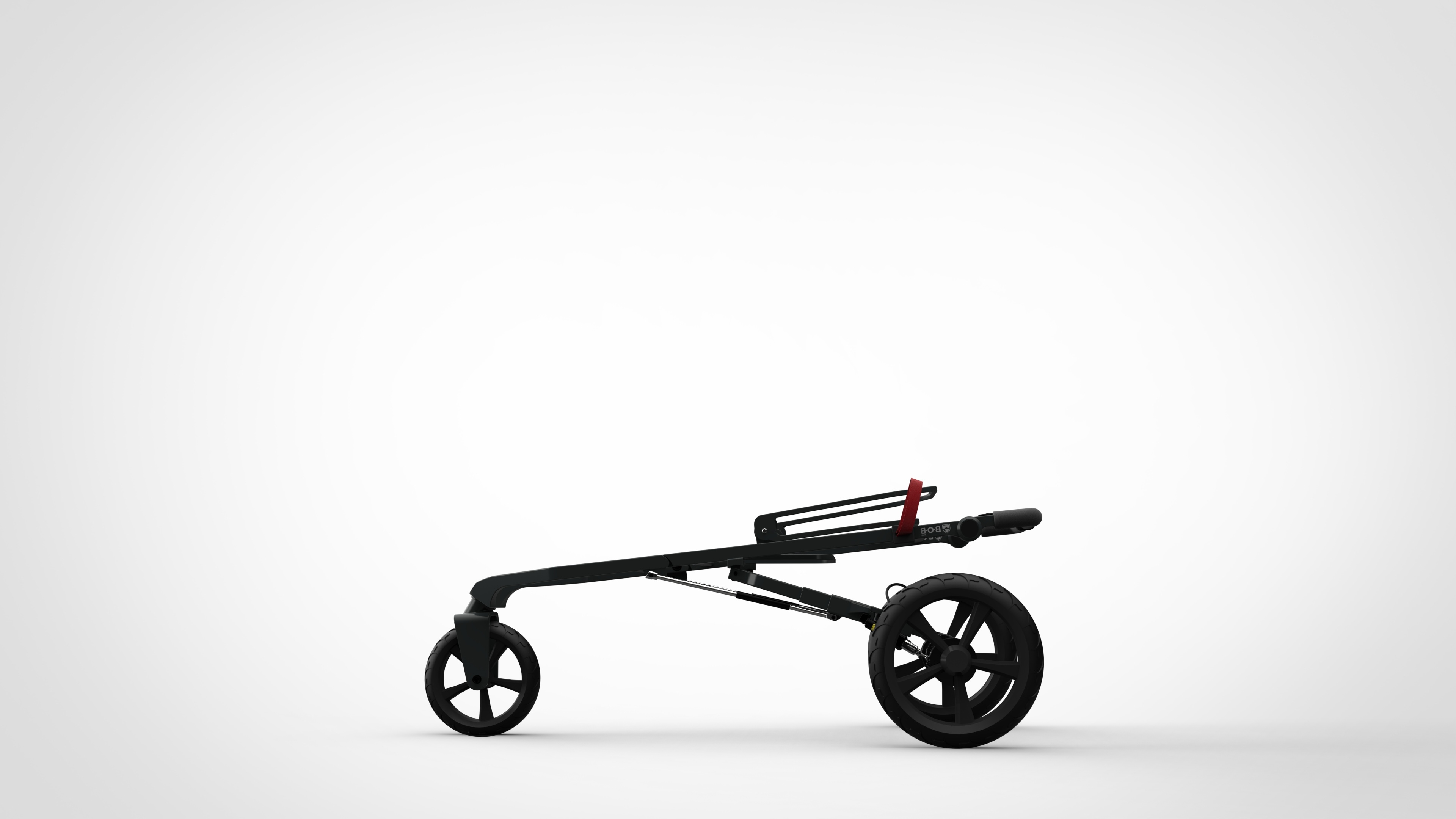
When a child is seizing, it is important to immediately place the child in a safe position, usually on their back. The stroller should be designed to allow the child to be placed in a safe position quickly and easily.
It is imperative that the stroller is easily collapsible and accessible for parents on the go. This allows for quick and easy access to the child in case of a seizure.
During the event of a seizure, it is valuable to offer parents a sense of reassurance. The stroller should be designed to be reliable and durable, making it easy for parents to deal with a terrifying event.
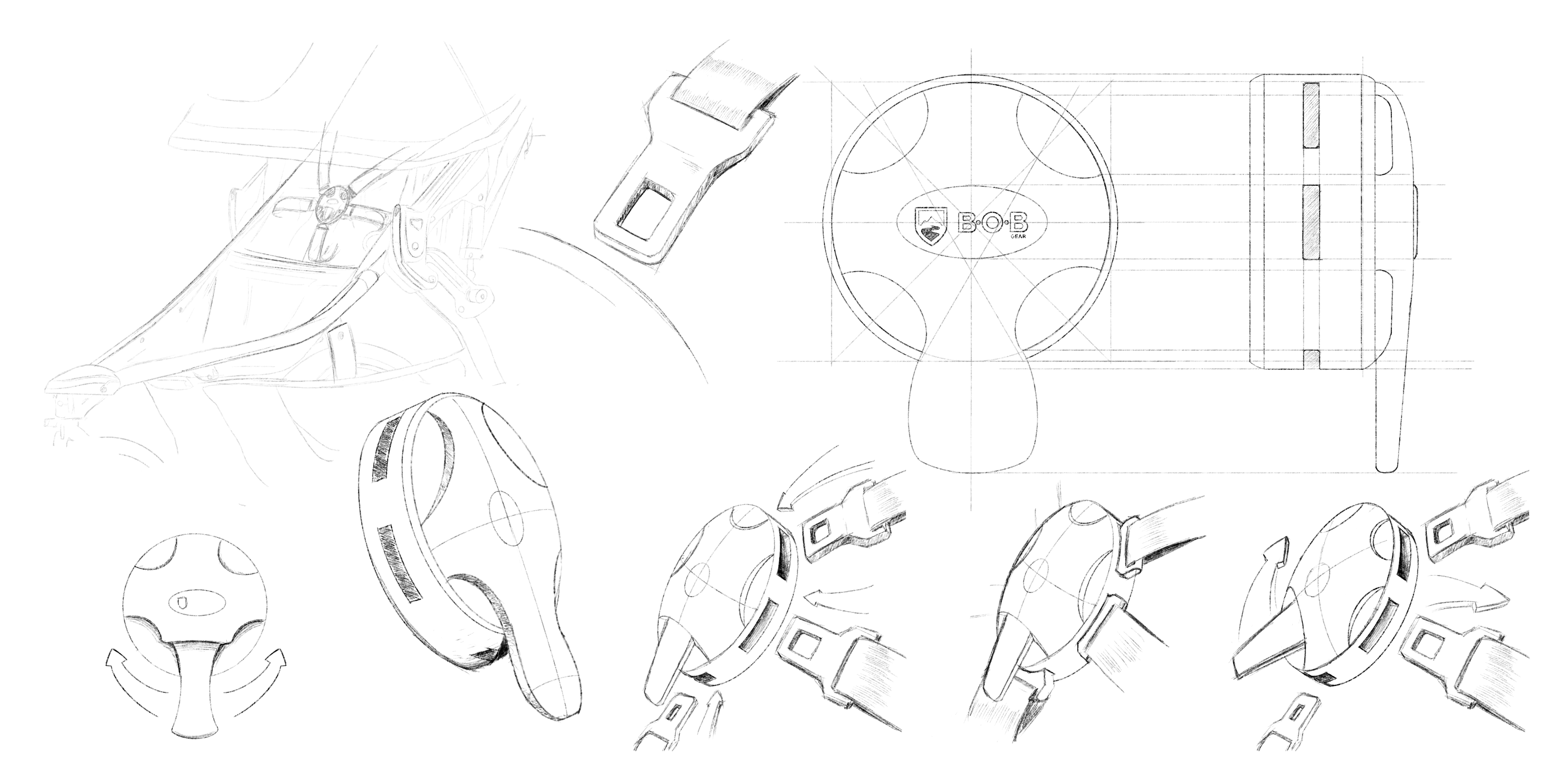
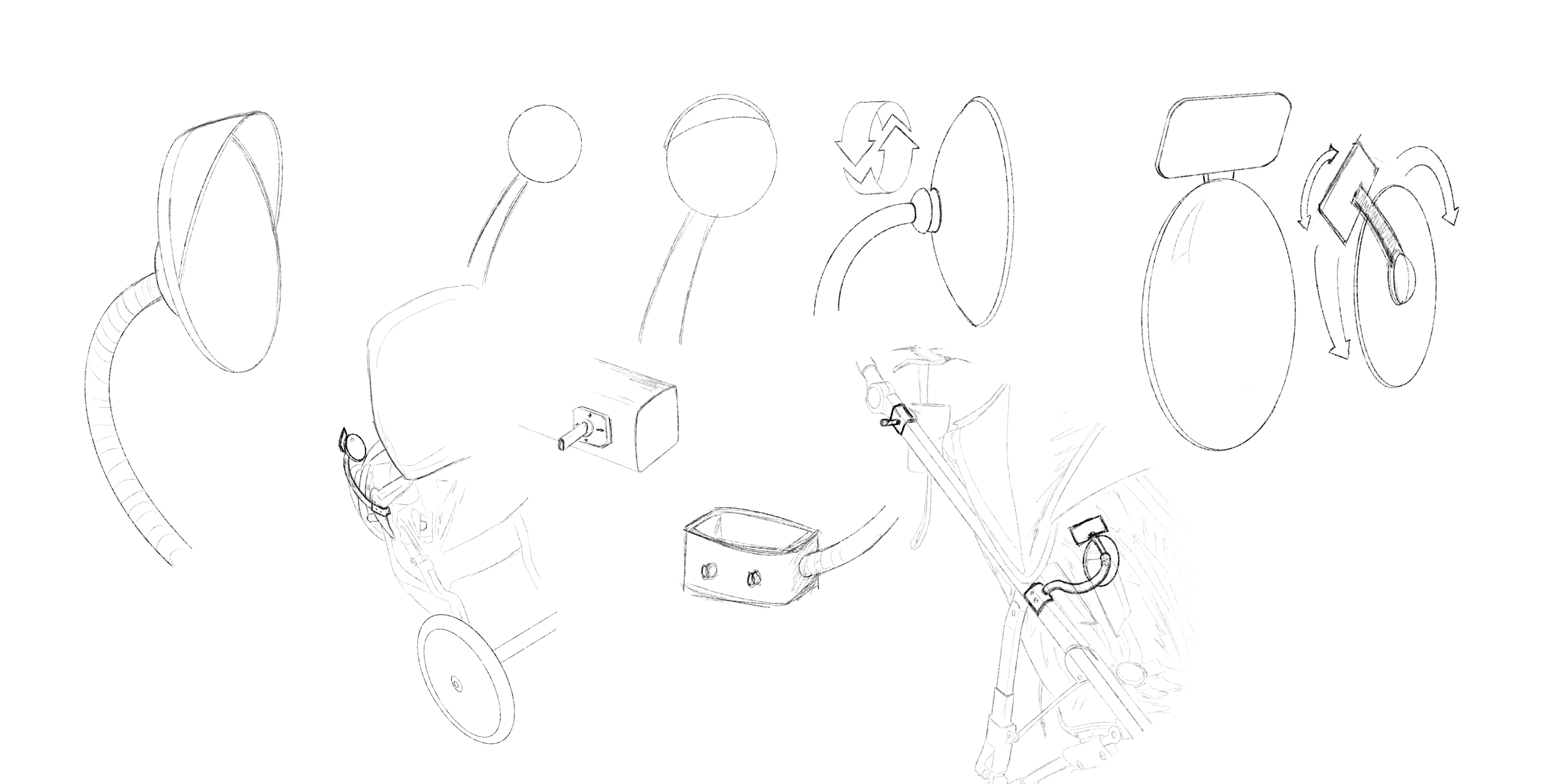
Initial sketches exploring differnet concepts including the relationship between the folding mechanism and the user's need for quick access.
Using B.O.B Gear's design language and business model, design a stroller that is capable of any terrain, while still offering a comfortable ride that reduces seizure symptoms.
Key constraints included weight limits, folding size, and scaling for manufacturability, requiring a balance between structural integrity and intuitive design.
The concept centers around "Discovery"—enabling parents and children to explore their world without the risk of seizures holding them back. The design emphasizes instinctual touchpoints and rugged capability that B.O.B. Gear is notable for.
After discussing the challenges that parents face with their children with seizures, and learning about the proper ways to deal with them, it was clear that there needed to be a design criteria for the stroller.
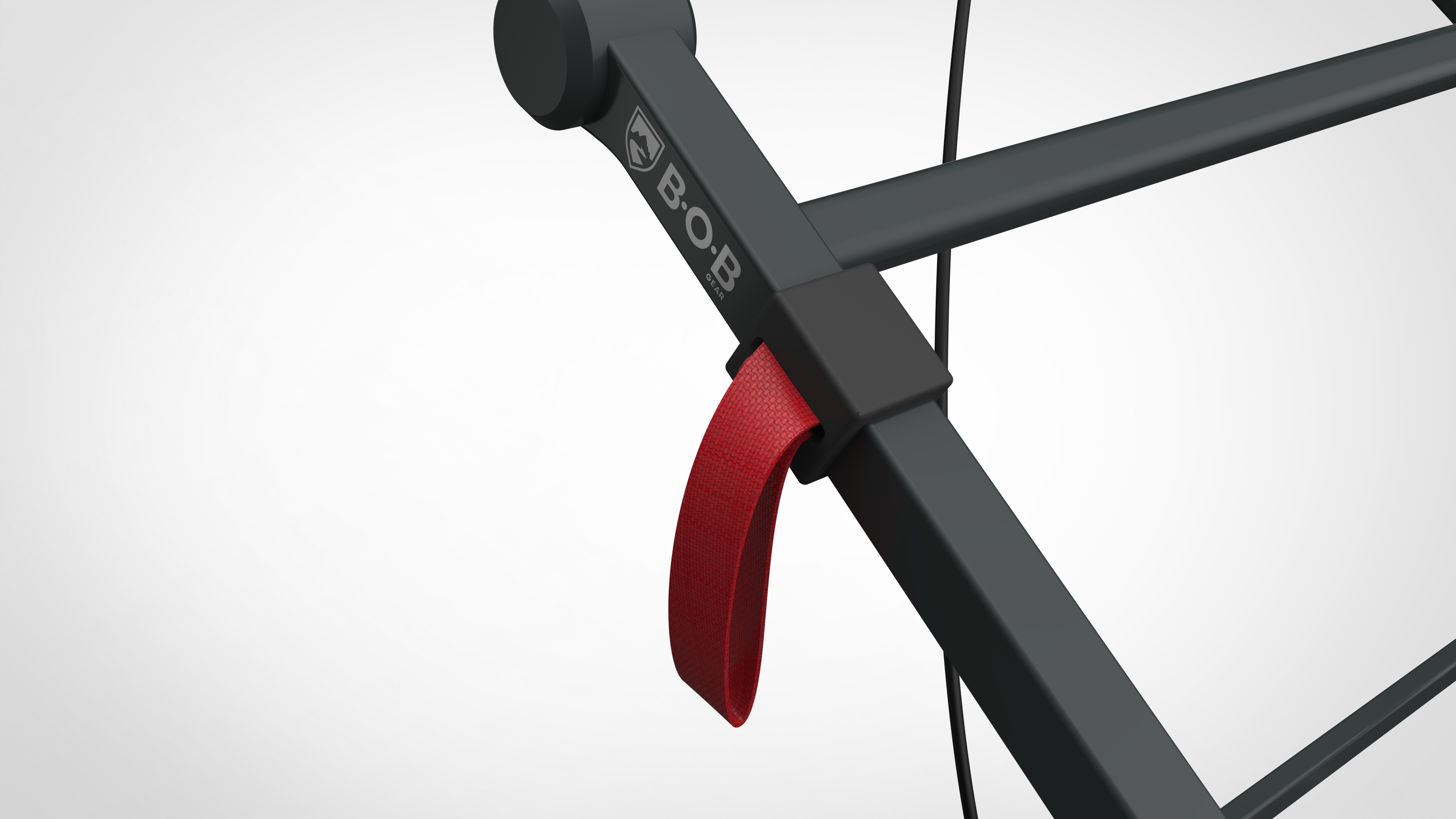
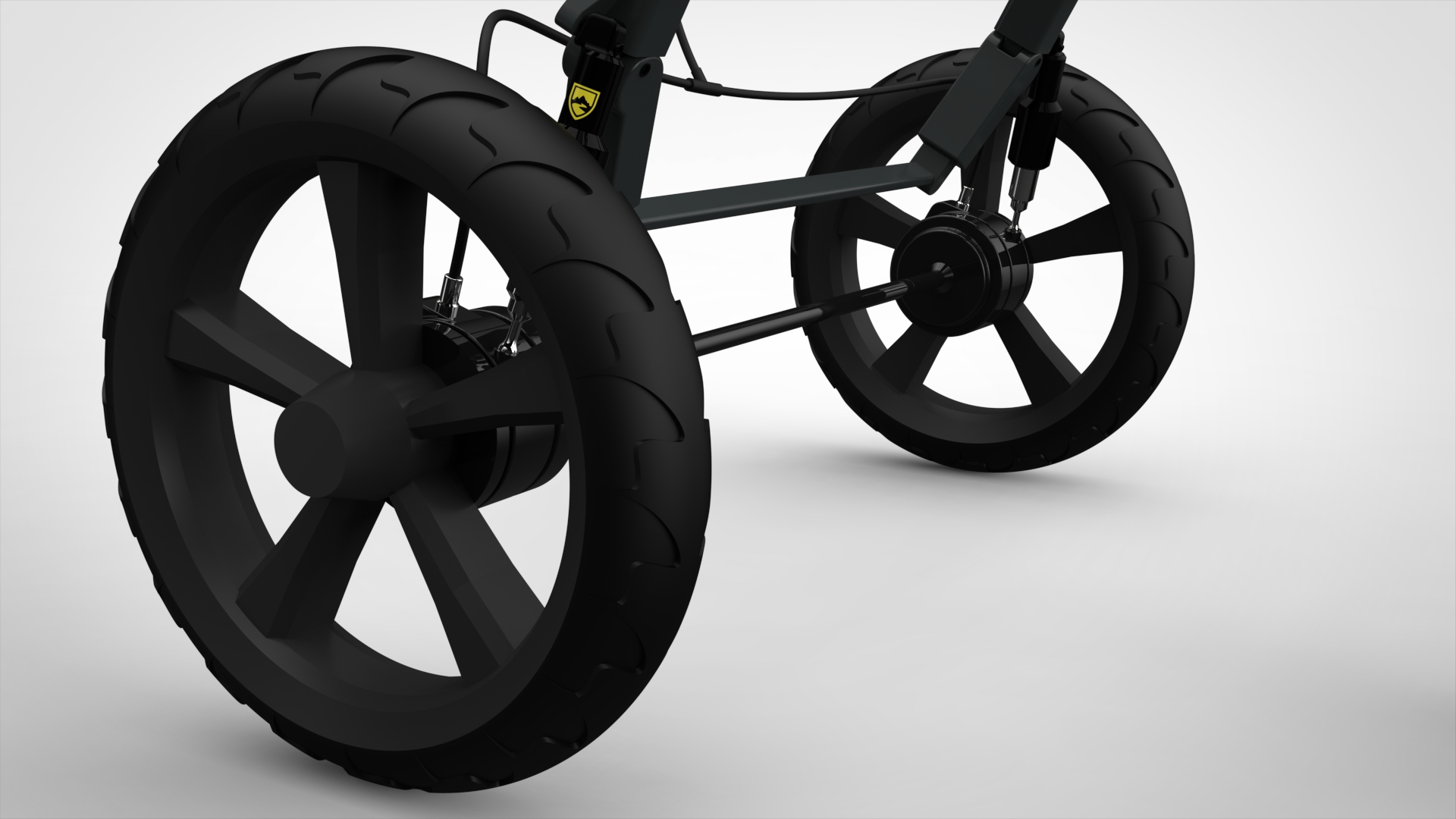
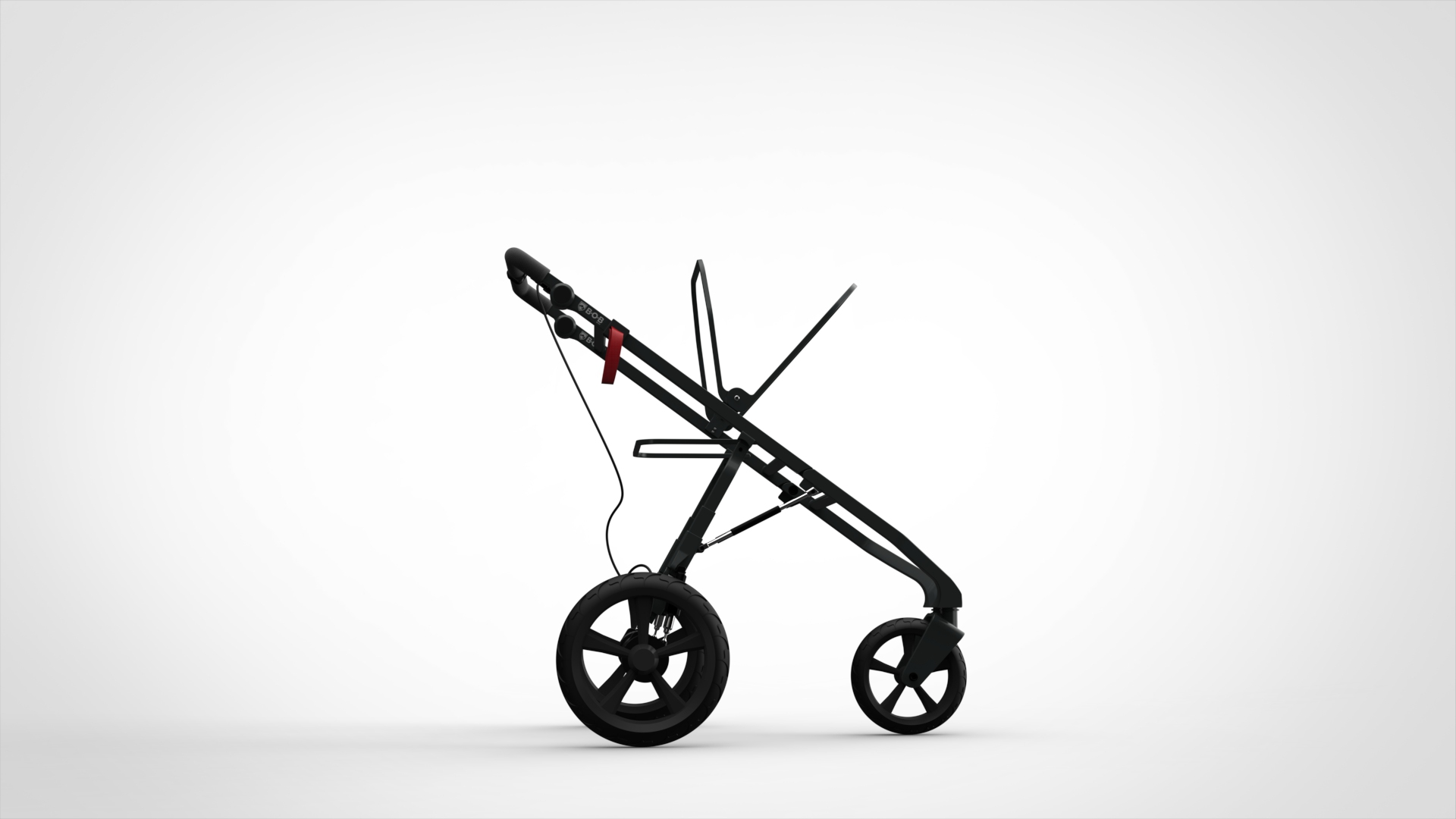
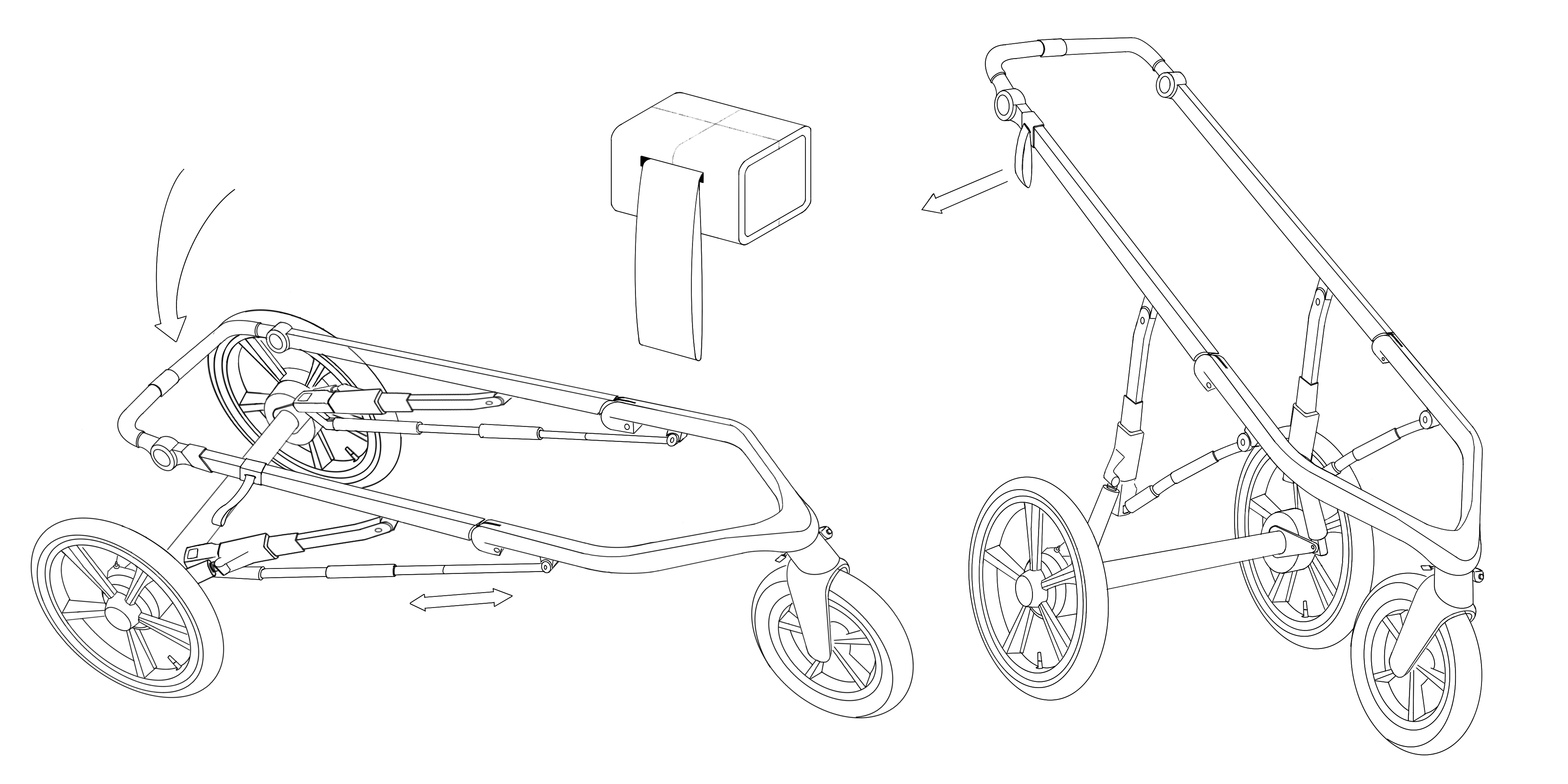
Iterative refinement of the frame geometry and hinge points was crucial to achieving the desired fold path and structural rigidity needed to give parents confidence in the stroller.
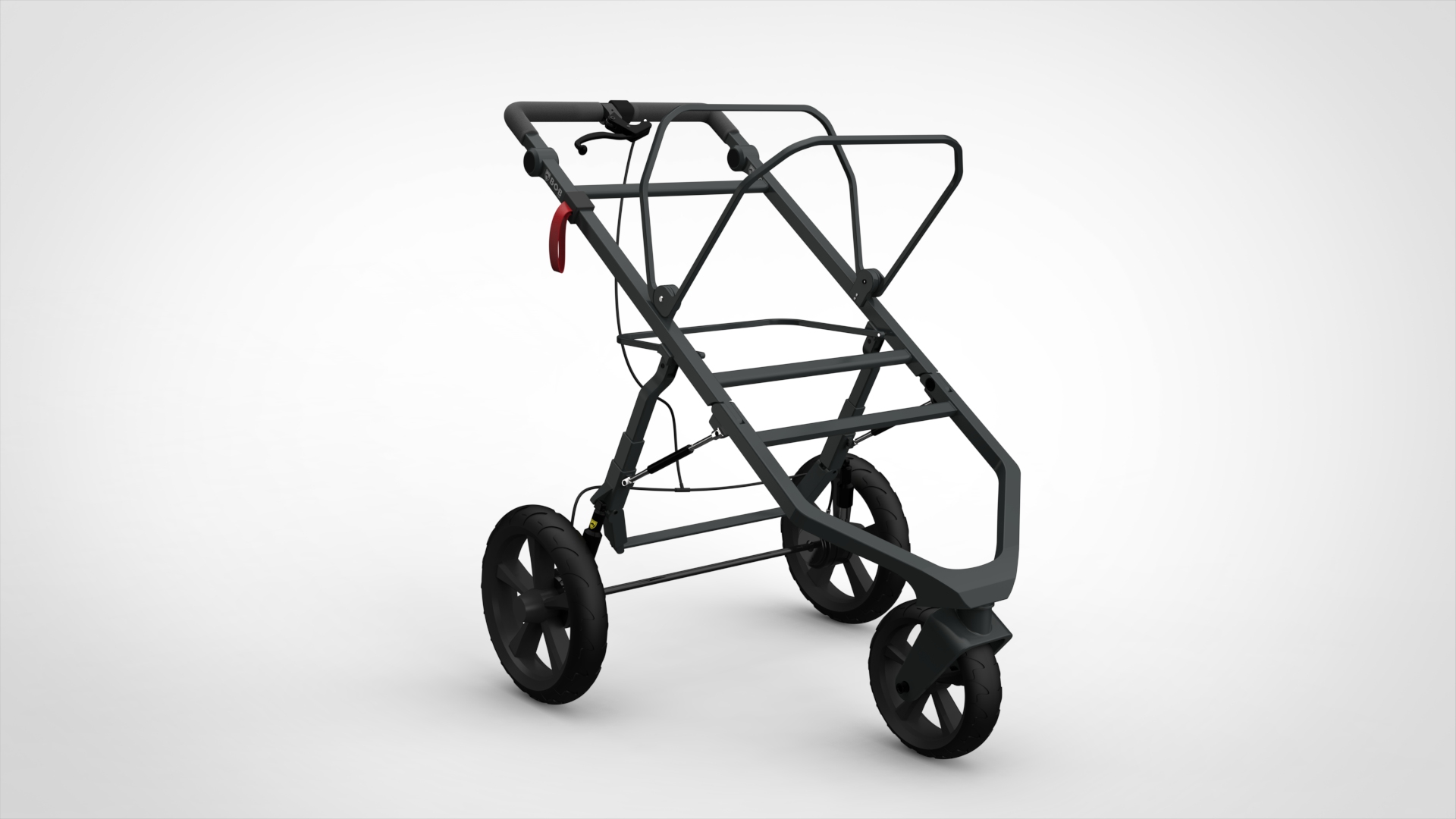
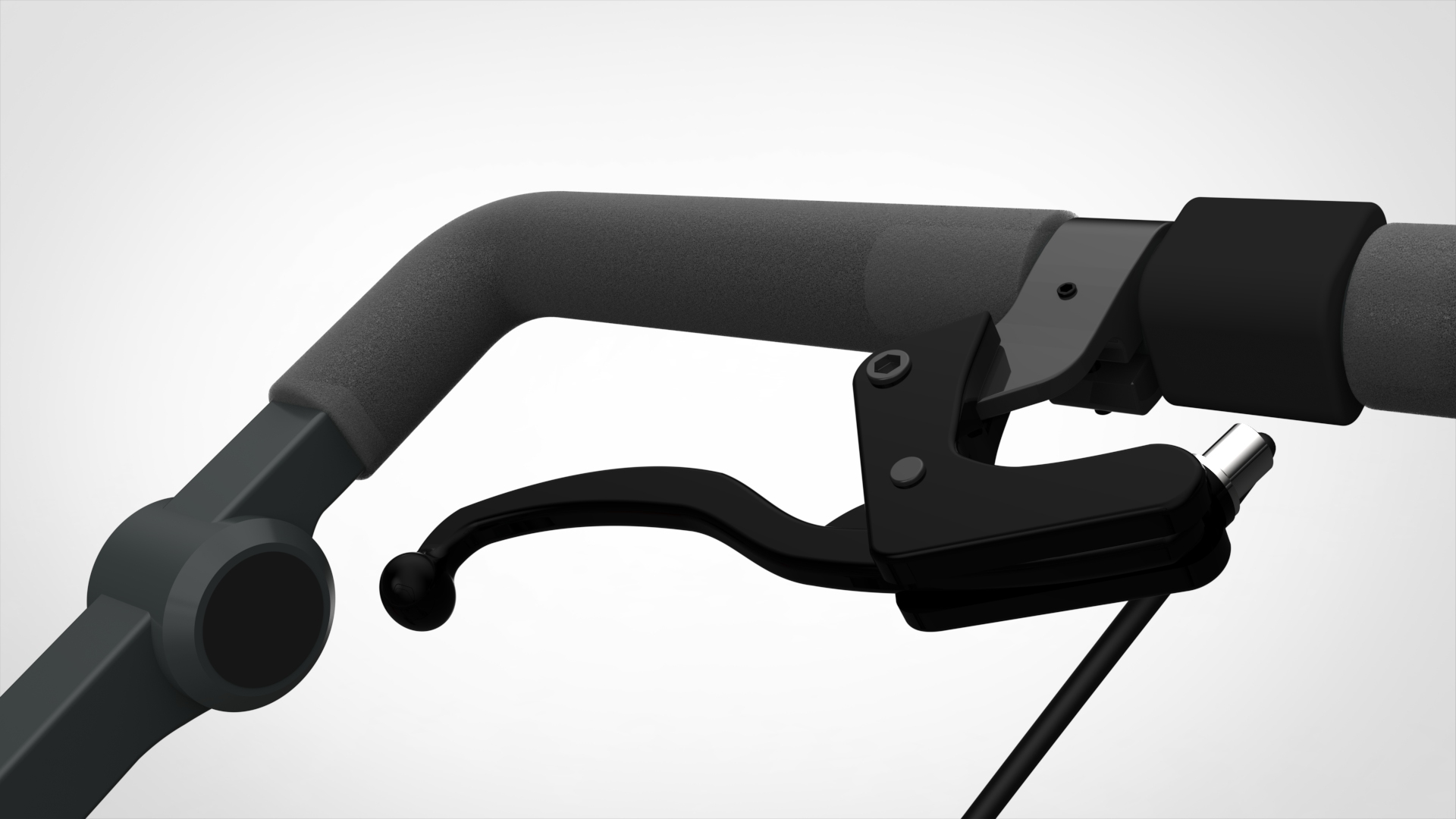
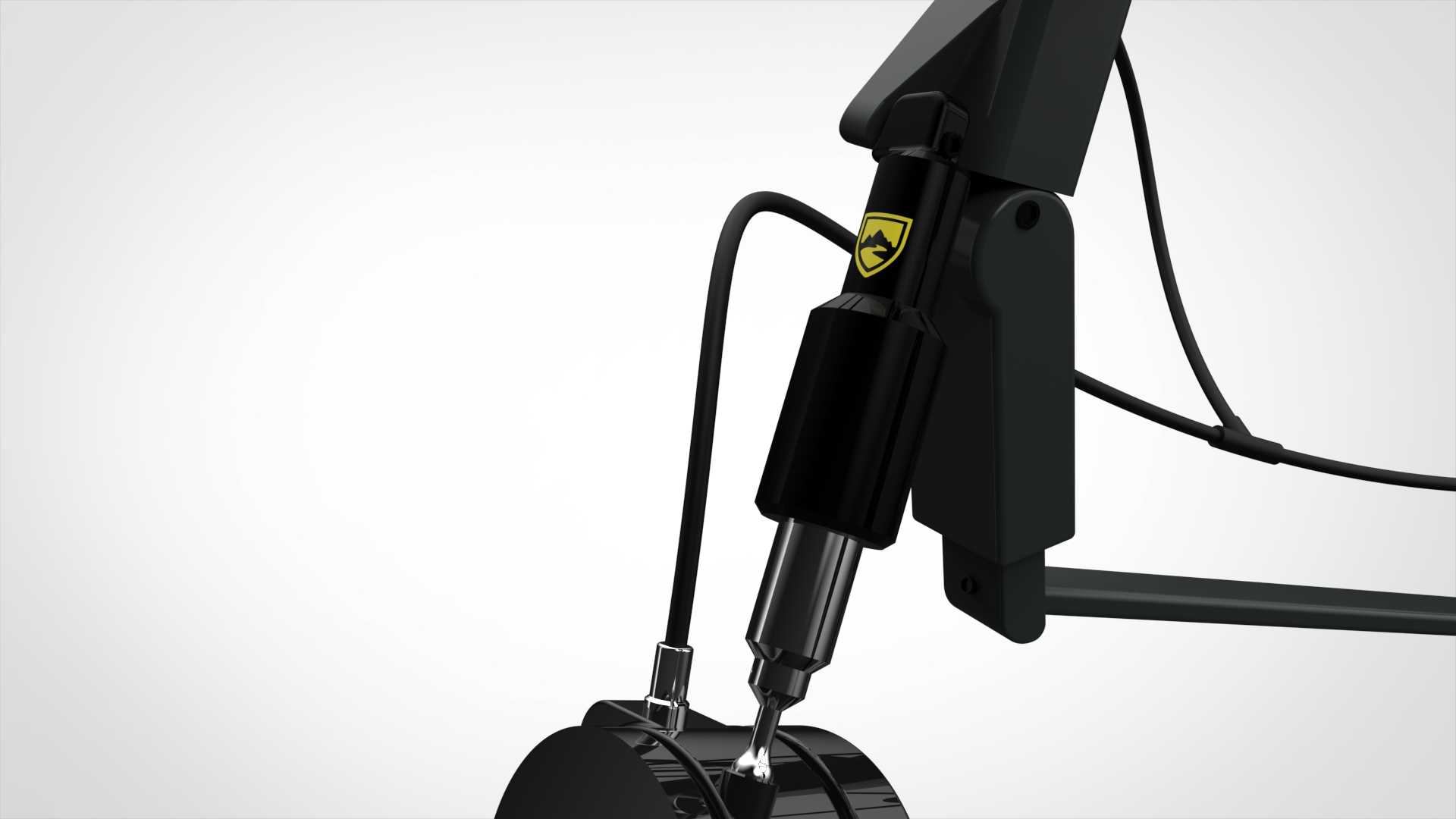
CAD modeling focused on component integration, ensuring that the folding mechanisms were protected yet accessible. Material selection prioritized high-strength aluminum alloys.
The final design allows the child to be reclined into a laid-back position, while the parent can easily deal with the child's seizures. Using B.O.B. Gear's adaptive suspension system, the stroller is able to provide a comfortable ride while still being rugged enough to handle any terrain. Adding features such as the emergency pull tab allows for quick reations and easy handling of the stroller in the event of a seizure.
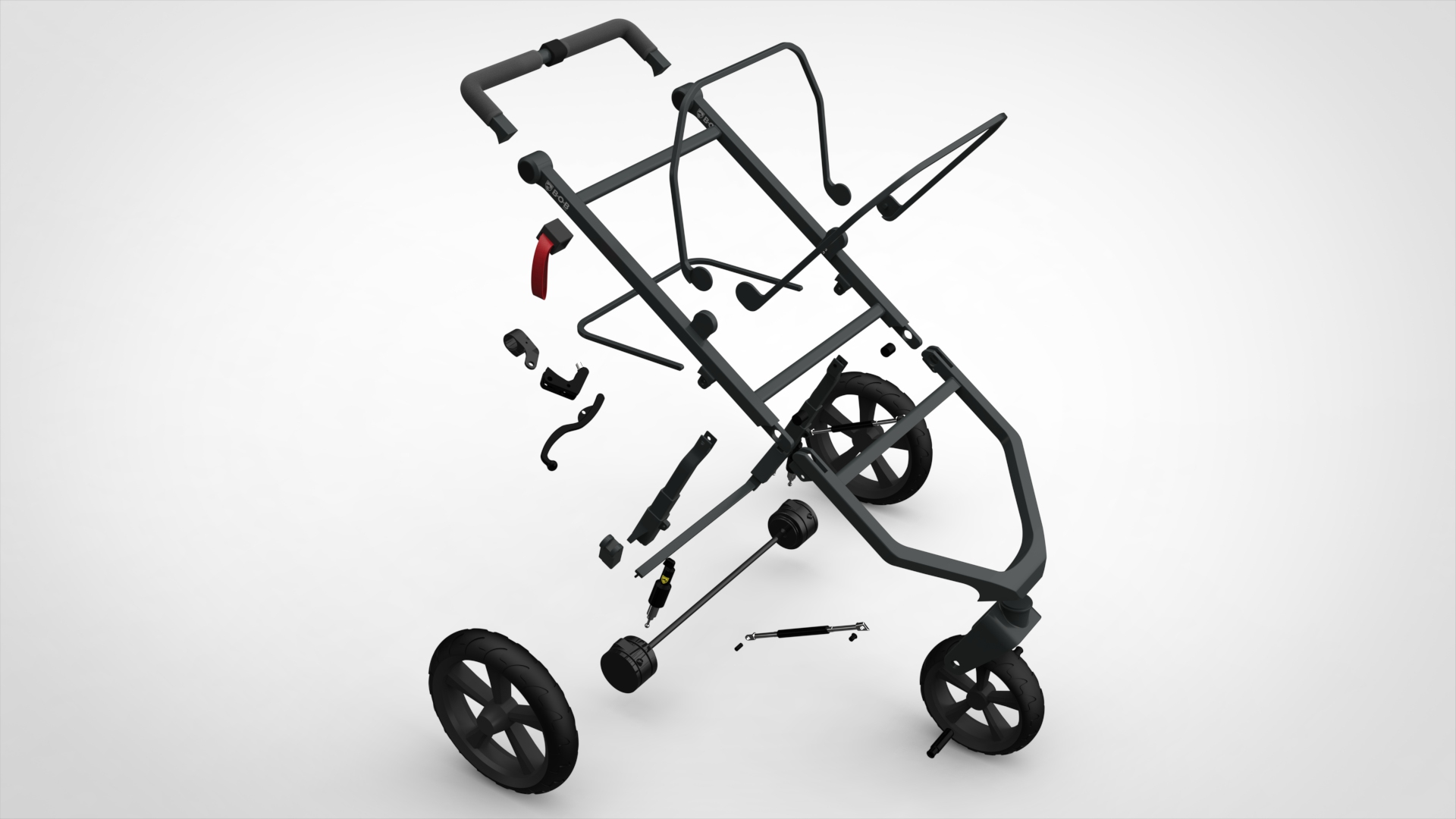
This project highlighted the importance of ergonomic analysis in product design. Balancing complex mechanisms with a clean, user-friendly aesthetic that meets the needs of a specific complex problem.
Success in mobility design comes from a deep understanding of the user's daily environment and routine. The research is just as important as the design process, and it is crucial to understand the user's needs and constraints, especially when it comes to disabilities.